
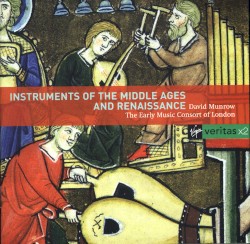
Instruments of the Middle Ages and Renaissance
Album by Early Music Consort of London, David Munrow
Released 1976
Tracklist
- CD 1: The Middle Ages
- 1Shawm: Saltarello[anonymous]1:55
- 2Reed pipe: Shepherd’s tune[traditional]1:02
- 3Bagpipes: (a) Cylindrical chanter: Saltarello; (b) Conical chanter: Ballade “Dame, se vous m’estés”[anonymous] / Guillaume de Machaut3:14
- 4Bladder pipes: Pastourelle “Au tans d’aost”[anonymous]1:08
- 5Panpipes: A prisai qu’en chantant plour[anonymous]1:13
- 6Transverse flute: Ach owê, daz nâch liebe ergâtMaster Alexander1:34
- 7Six-holed pipe: Dou tres douz nonThibaud of Navarre1:55
- 8Double pipes: Virelai “Gracïeuse”Jehan de Lescurel1:21
- 9Pipe and tabor: Dansa “Ben volgra, s’esser poges”Guiraut d'Espanha de Toloza1:13
- 10Recorder: English Te Deum[anonymous]1:55
- 11Gemshorn: Chansonnette “Quan je voi iver retorner”Colin Muset1:33
- 12Portative organ: Madrigal “Ay, sconsolato ed amoroso”Vincenzo da Rimini1:43
- 13Positive organ: Estampie[anonymous]2:23
- 14Hurdy-gurdy: Chanson “Joliveté et bone amor”Jehan d'Esquiri1:39
- 15Clavichord: Ellend du hastConrad Paumann2:16
- 16Trumpet: (a) Clarion: Fanfare “Untarn slaf tut den sumer wol”; (b) Buisine: Fanfare “Ad modum tubae”Herman, Monk of Salzburg / Guillaume Dufay2:21
- 17(a) Cowhorn: Ballade “De moi doloureus”; (b) Medieval Cornett: Das Nachthorn; (c) Slide trumpet: Geisslerlied “Maria muoter reinû maît”; (d) Ensemble (medieval cornett, slide trumpet, alto shawm, tabor): Der TrumpetGillebert de Berneville / Herman, Monk of Salzburg / [anonymous] / Herman, Monk of Salzburg3:37
- 18Harp: (a) Metal strung: Lai “Qui porroit un guierredon”; (b) Gut strung: Dance tune[anonymous] / Tassin2:14
- 19Lyre: Goliard melody “O Roma nobilis”[anonymous]0:51
- 20Psaltery: Hymn to St Magnus “Nobilis humilis”[traditional]1:01
- 21Dulcimer: Madrigal “Tanto soavemente”Jacopo da Bologna1:57
- 22Lute: Madrigal “Di novo è giunto”Jacopo da Bologna2:14
- 23Mandora: Chanson “Amours que porra”Thibaut de Blason1:23
- 24Long-necked lute: Aquel que de voontadeAlfonso X el Sabio1:15
- 25Cittern: Virelai “Quant je sui mis”Guillaume de Machaut1:02
- 26Citole: English dance[anonymous]1:46
- 27Rebec: La septime estampie real[anonymous]1:05
- 28Fiddle: Ballata “Poi che da te mi convien”Francesco Landini1:26
- 29Bowed lyre: Virelai “Comment qu’a moy”Guillaume de Machaut1:35
- 30Tromba marina: Improvised fanfare Motet “Quant ie le voi — Bon vin doit — Cis chans veult boire”[anonymous]1:05
- CD 2: The Renaissance
- 1Shawm: Two courantesSamuel Voelckel2:13
- 2Curtal: Chanson “Ce qui souloit”Tielman Susato1:45
- 3Rackett: Caro ortolanoGiorgio Mainerio1:30
- 4Crumhorn: PadouanaJohann Schein2:09
- 5Cornamuse: Bicinium “Le cuer de vous”Antonio Gardano1:11
- 6Kortholt: Bicinium “Mon petit cuer”Guillaume le Heurteur1:23
- 7Rauschpfeife: Three Bransles DoublesMichael Praetorius1:33
- 8Flute: Chanson “Amor me poingt”Claudin de Sermisy1:26
- 9Recorder (a) 8′ Consort: Chanson “Hellas! Amour”Guillaume le Heurteur2:17
- 10Recorder (b) 4′ Consort: The Fairie RoundAnthony Holborne1:22
- 11Renaissance organ: Entrada réalPedro de Soto2:22
- 12Regal: (a) Prelude “Ascensus simplex”; (b) “Min Hertz hat sich ser gefröwet”Conrad Paumann / [anonymous]1:35
- 13Harpsichord: Toccata from the Naples MSGiovanni Salvatore1:57
- 14Virginals: Variations on the Romanesca[anonymous]2:35
- 15Xylophone: Ballo FranceseGiorgio Mainerio0:57
- 16Trumpet: (a) Unmuted: Toccata from Orfeo, 1607; (b) Muted: Toccata from Orfeo, 1607Claudio Monteverdi1:26
- 17Sackbut: (a) Solo: Adagio and Allegro; (b) Consort: “Lobt Gott ihr Christen alle gleich”Heinrich Biber / Michael Praetorius2:59
- 18Cornett: Canzona for “due canti”Girolamo Frescobaldi3:08
- 19Alto and tenor cornett: Bicinium “Amour cruel”Pierre de Manchicourt1:22
- 20Serpent: Canzona Quarta for “basso solo”Girolamo Frescobaldi2:22
- 21Lute: Orlando sleepethJohn Dowland1:44
- 22Theorbo: A Fancy — Praelude, or VoluntaryThomas Mace1:48
- 23Mandora: Ballo AngleseGiorgio Mainerio1:06
- 24Cittern: Galliarde for cittern and bassAnthony Holborne2:22
- 25Ceterone: Toccata primaAlessandro Piccinini1:44
- 26Bandora: GalliardJohn Dowland0:50
- 27Orpharion: Duet “Le Rossignol”[anonymous]1:36
- 28Vihuela: Fantasia XI from El maestro, 1536Luis de Milán2:50
- 29Guitar: Pavana (Variations on the Romanesca)[anonymous]1:32
- 30Viol: (a) Consort: Fantasy in four parts; (b) Lyra viol: Duet “Forget me not”William Byrd / Thomas Ford3:21
- 31Violin: La volta[anonymous]1:32
More by Early Music Consort of London, David Munrow
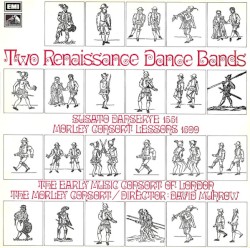
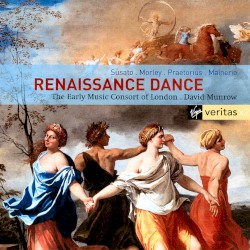
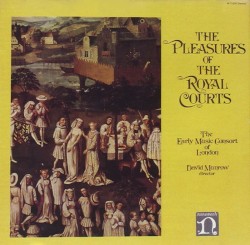
Release credits
- horn [17], trumpet [1, 17]
- clavichord [15], harp [18], hurdy gurdy [14], organ [13], portative [12]
- struck string instruments [21], tabor [17], tambourine [4], timpani [1, 27], triangle [17]
- bagpipe [3-4], conductor [10], fipple flute [7-8], gemshorn [11], pipe and tabor [9], reeds [2], shawm [1, 17], transverse flute [6], treble recorder / alto recorder [10]
- instrument [10]
- lyre [19], rebec [21, 27]
- bell [10], harp [18], psaltery [20]
- buisine [16]
- bagpipe [4], citole [26-27], lute [11, 22, 24], mandora / gallichon [23], mouth harp [7], pan flute [5], tambourine [1], tenor recorder [10]
- gittern [25]
- buisine [16], cornett [17], trumpet [16]
- rebec [12, 22], tenor recorder [10], tromba marina [27]
Issues
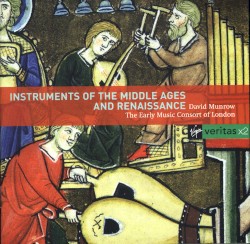 I
I- I2x 12" Vinyl1976
- IApril 2007
 I2007
I2007